Blog Post
Building Trust and Dialogue: The Future of Pluralism in Mexico
Insights from the "Building a Pluralist Mexico: Opportunities and Challenges" webinar.
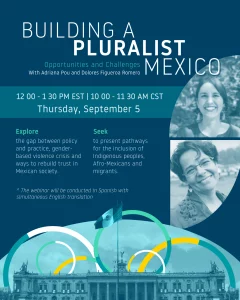
On September 5, 2024, the Global Centre for Pluralism presented the webinar, “Building a Pluralist Mexico: Opportunities and Challenges,” to accompany the launch of the Global Pluralism Monitor: Mexico report. Global Centre staff member Andrea González presented the key findings from the report. Experts Dolores Figueroa Romero (CIESAS Post-doctoral fellow) and Adriana Pou Hernandez (Bank Information Centre) joined us to share a reflection on the findings of the Monitor report and opportunities for fostering pluralism in Mexico.
The webinar “Building a Pluralist Mexico” was a great opportunity to learn and to listen from experts on the current state of diversity, belonging and trust in Mexico. Some of the key findings about the Global Pluralism Monitor: Mexico report shared included inputs on the gaps between policy and practice, the gender-based violence crisis, and re-building intergroup trust in Mexico. Emphasizing the key challenges, opportunities and hopes for a pluralistic future in Mexico, Dolores Figueroa Romero and Adriana Pou Hernandez enriched the audiences’ perspectives on how pluralism is reflected across multiple sectors and communities in MexicoIn the discussion, both speakers took us through the importance of recognition, of building trust across communities, and of dialogue to combat polarization, before wrapping up with a discussion of the future of pluralism in Mexico.
Social polarization, the lack of a middle ground and the need to establish dialogue all emerged in relation to one another in the discussion. As Figueroa Romero mentioned, there are not many spaces where the government can or does consult with civil society. She emphasizes that civil society and local communities are creative in their fight for justice, and that the Mexican federal government could work collaboratively with these organizations and benefit from the rich findings and information they generate.
For dialogue to happen, both speakers emphasized that middle ground spaces for dialogues between state and non-state actors, where all parties can come in with equal footing, are vital for the safeguarding of pluralism in Mexico. To have impact, Pou Hernandez clarified that these middle ground spaces for dialogue need to be strengthened and fostered across Mexico, in a way that encourages various groups across society to participate. This includes actors from the private sector, from across varying socioeconomic groups, from Indigenous and Afro-Mexican communities, especially their women and youth, migrants, and victims of forced disappearances. Dialogues between all groups and the government are vital to creating policies that reduce vulnerabilities and start working towards reconciliation with populations that have been neglected, denied their rights or marginalized by previous governments. As Figueroa Romero notes, the government has the opportunity to help strengthen and support the organizations that are already doing key work in these areas.
Pou Hernandez called attention to the need to recognize the Other, and their differences and diversity, as individuals who bring equal value to society as a key step for building social coexistence. In her view, recognizing the Other and their value at an individual level can be a foundation block for beginning to address polarizing narratives and practices against Indigenous, Afro-Mexicans and migrants across the country. Importantly, recognition is a crucial step for dismantling the discriminatory social and institutional structures that have had devastating consequences for these groups in particular. But, how can we recognize the Other if we do not trust them?
Recognizing the Other and their value at an individual level can be a foundation block for beginning to address polarizing narratives.
This lack of trust and empathy, Pou Hernandez tells us, is rooted in lack of knowledge about these groups’ experiences, journeys or identities. To this, Pou Hernandez suggests that learning about Indigenous and Afro-Mexican history, or where migrants come from and why they choose to migrate, as well as about the challenges that all of these groups face, could allow individuals to further humanize these groups, understand where they’re coming from, and empathize with them. Understanding the historical processes that lead to migration or cycles of poverty, personal histories, and how diverse groups’ worldviews or cosmovisions differ from communities with greater social and economic power are some of the first steps we can take to combat the lack of knowledge and start building trust.
Finally, Figueroa Romero and Pou Hernandez reflected on president-elect Dr. Claudia Sheinbaum’s then-upcoming government. Dr. Sheinbaum assumed office on October 1st, 2024, becoming the first woman to hold this office in Mexico. Both speakers cited the expectations that Dr. Sheinbaum’s sexenio, or six-year term, will be a continuation of Lopez Obrador’s government. Pou Hernandez noted the recent changes in political discourse that now recognize the need for reparations to Afro-Mexican and Indigenous communities, but at the same time, have backtracked on solidarity and respect for migrant communities. Dr. Sheinbaum’s government is expected to bring more of the same, which could be harmful for migrants across the country. Still, both Pou Hernadez and Figueroa Romero believe in
Figueroa Romero highlighted the popular acceptance and recognition of this government across the country, as well as the ability of Mexicans to hold the government accountable to their promises on issues of feminicides, disappearances and development projects in Indigenous territories.
There is no “recipe” or step-by-step guide for pluralism, but a pluralist Mexico is possible.
Likewise, Pou Hernandez noted that to advance pluralism, Dr. Sheinbaum’s government will need to challenge the colonial and racist structures that see the inclusion of migrants and Indigenous and Afro-Mexican autonomy as a threat. Seeing groups’ differences as valuable to our society, and likewise addressing the societal and institutional barriers and challenges that limit inclusion and belonging, is central to fostering pluralism.
Ultimately, the pathway for pluralism in Mexico is being built and advanced every day, but not without its challenges. From the presence of organized crime, and the heightened vulnerability of Indigenous peoples in the judicial system, there are a number of obstacles in the way of building a pluralist society. However, as Figueroa Romero and Pou Hernandez highlighted in their remarks, a pluralist Mexico is possible.
There is no single “recipe” or step-by-step guide on how to become a more pluralistic country. In fact, at the Global Centre for Pluralism, we believe that pluralism is a process and something that we are all continuously working towards. Figueroa Romero and Pou Hernandez remind us that dialogue, building trust, and learning about one another are excellent places to start.
Meet the speakers
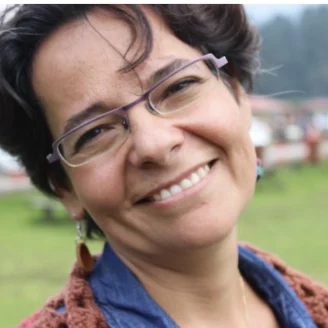
Social Anthropologist
Focused on conceptualizing the interconnection between structural and gender violence against Indigenous women in rural areas in Mexico, Figueroa Romero is a research fellow at York University' Center of Research of Latin America and the Caribbean and CIESAS.
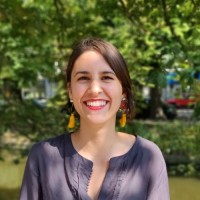
Lawyer
Specializing in Development, Gender and Conflict, Pou Hernandez's work integrates human rights, socio-environmental justice and access to reparations for victims. Currently, she is a Senior Child Rights Associate at the Bank Information Center, focusing on preventing sexual violence in development projects.