Canadian Elections
“Elbows Up”? Canada’s 2025 election, fight for sovereignty and what they mean for pluralism.
The Canadian 2025 election is one like no other – as the global economy slips into turmoil and the world order shifts, a resurgence in Canadian national pride underpins this decisive moment. In recent months, Canada’s political and economic sovereignty has been called into question amidst a trade war and threats of annexation. Based in Canada, we at the Global Centre for Pluralism are reflecting on some of the key issues that Canadians will be voting on this year and piecing together what this means for pluralism.
Threats to Canadian sovereignty require serious actions, and every major party – the Liberal Party, the Conservative Party of Canada, the New Democratic Party, the Green Party and the Bloc Quebecois – have treated these as existential. In this time of political uncertainty, the revival of pride in Canadian identity has resulted in most parties promising to protect Canadian values. Likewise, many of us are reflecting on what it means to be Canadian and what role we play in safeguarding what makes Canada, Canada.

Multiculturalism, hockey, bilingualism, maple syrup and dominating in the Winter Olympics first come to mind when we think about Canada. But Canada is so much more: it is Canadian communities coming together to welcome 25,000 Syrian refugees in 2015, as part of long-standing support of welcoming immigrants to Canada; the recognition and importance of Quebec’s culture and contributions to the country, not only linguistically; the changes in Canada since the Truth and Reconciliation Commission, which are paving the way for healing and preventing abuses against Indigenous Peoples; and it is the high levels of trust between people of different ethnic, religious or linguistic backgrounds, in spite of the vastness of our territory. There are just a few examples of how Canadians have worked together to build a stronger, more cohesive society with more equal opportunities for all, across our differences.
This ability to embody pluralism – to be connected and constructive despite, and because, of Canada’s vastness and diversity, is woven into Canadian values and can help us knit the country together in our shared citizenship as the country heads into an uncertain future.
What are we watching?
As Canadians head to the polls, there are many issues troubling voters: affordability, housing and cost-of-living, effective management of immigration and of course, tariffs that threaten not only our own economic livelihoods but that are disrupting global trade, with huge long-term impacts on the global economy.
Affordability had long been a concern for many Canadians – a recent BDO Canada Survey revealed that 50 per cent of Canadian households are now living paycheque to paycheque. Nationwide, Canadians are using food banks at an unprecedented level – March 2024 recorded over 2 million visits, the most visits to food banks in Canadian history. The trade tariffs create unease for many living in Canada, as they could result in mass layoffs, reduced wages, disruptions in local economies, and an increase in the price of groceries and of housing.
As Canadians struggle to make ends meet, we look back to the Global Pluralism Monitor: Canada report findings. The bottom line is that many groups from across the country have been facing more barriers than others when it comes to accessing employment, housing, healthcare and more. Our research has shown that over time, these groups have repeatedly included Indigenous Peoples, Canadian youth, racialized Canadians and racialized immigrants. Now Canadians from across different groups, including non-racialized Canadians, particularly in the automotive sector, crop and animal production, and oil and gas sectors are already feeling the impact of the tariffs.
As major parties promise to counter tariffs and build the Canadian economy, Canadians are given a unique opportunity to work across our differences and ensure that moving forward the government builds responses to the trade war that consider how different Canadians will feel its impact differently and helps prepare us all for what’s on the horizon.

We expect tariffs to worsen the economic crisis. As a consequence, this can worsen the socioeconomic divides in the country, a trend we should be alive to and work to counteract. The Canadian government tightened immigration policy and reduced the projected number of new immigrants between 2025 and 2027 as part of an approach to ease the burden on the country’s housing inventory and health system. With this in mind, we hope that future immigration policies uphold pluralist values—ensuring that newcomers receive the support they need to integrate into Canada. At the same time, approaches to immigration should ensure that the communities into which immigrants will be welcomed to are equipped with the proper resources, as they are critical for re-energizing an immigration system that builds positive outcomes for all, a stronger sense of belonging for everyone, and for helping the country fulfill global leadership commitments.

This ability to embody pluralism – to be connected and constructive despite, and because, of Canada’s vastness and diversity, is woven into Canadian values and can help knit the country together in a shared citizenship as the country heads into an uncertain future.
The Canada Monitor report notes that “the immigrant generation bears a serious income penalty, reflecting the country’s failure to utilize the training and skills new immigrants bring to the country.” StatsCan data from 2024 confirms that recent immigrants, particularly racialized immigrants, continue to struggle to make ends meet, regardless of previous qualifications and work experience. Many immigrants believe that they were welcomed into a country without adequate housing infrastructure or sufficient job opportunities. These struggles are felt by both newcomers and the general population even more acutely today, particularly among Canadian-born youth that feel they no longer have the same opportunities as generations before them. We urgently need pluralist policy responses that address the similar yet differentiated needs of communities in these precarious times. If done well, these policies can build responses that address these diverse needs and build on our concepts of shared citizenship that underpin a strong pluralist society.
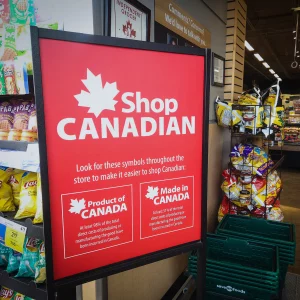
On many occasions, Canadians have come together in times of adversity – a quality that can be a source of strength as we head into months or years of uncertainty. The rise of the ‘Buy Canadian’ movement – which encourages buyers to purchase ‘made in Canada’ products and retailers to increase distribution of Candian goods – is a great example, yet not one without challenges. Despite the surge in domestic products sales in the past few weeks, young and socioeconomically disadvantaged Canadians report challenges in engaging with this movement as prices continue surge and it becomes financially impossible to buy Canadian.
As we think of moments and movements that seek to bring Canadians together, we need to think about ways in which these moments and movements can work for all Canadians, not just some. A pluralism orientation to guide these moments in which we come together can help us see more successes and opportunities for us all as we navigate uncharted waters.
Where do we go from here?
Words published fifteen years ago in an article from Policy Alternatives still reflect a relevant warning as we head into a federal election. The article reads, “As the food, water, and other basic resources dwindle, so does the willingness to share.” The economic hardships that will result from increased tariffs have resulted in a surge of unity, of nationalism and of finding strength in Canada. However, scarcity mindsets could result in a belief that more resources for one group mean fewer resources for the other – sowing mistrust, anxieties, and even conflict between groups. We know that this unwillingness to share is not who Canada is.
We know from our research around the world that a rise in divisions and suspicion of others unlike us is connected to economic contractions and uncertainty. While this may be what Canada could become if policies do not address these issues with a pluralism mindset, we are confident that Canada has the tools to use this moment to buck the global trend and grasp an opportunity to expand on the strengths that make us Canadian. As the Institute for Research on Public Policy’s Affordability Action Council notes, “there can be no either-or solutions to these challenges,” and holistic policy approaches must not leave anybody behind. Canada has a long history of kindness, solidarity and welcoming, of engaging with deep differences and finding a collective path forward. These traits are not to be taken for granted. Like a muscle, pluralism requires us to work at it every day to remain strong and robust to support us in the challenging times ahead. Pluralism requires an active effort on everyone’s part to ensure that we all feel recognized in our society.

These efforts also include a recognition of the contributions and lived experiences of Indigenous Peoples, seeing the advancing of reconciliation as the key to building a stronger future in Canada. However, between 2015 and 2023, only thirteen of the 94 Calls to Action issued by the Truth and Reconciliation Commission were fulfilled. We expect that the incoming government understands that reconciliation with Indigenous Peoples cannot be ignored, or postponed, for the sake of the trade war. Food prices are already overwhelmingly high on First Nations Reserves, in the Northern Territories and for Indigenous Peoples living off-reserve. A Statistics Canada survey noted that 60 per cent of Indigenous Peoples found that rising prices added to the amount of stress in households over the past 6 months. Pluralist responses to the tariffs would consider how Indigenous Peoples will be impacted, while also recognizing the impact that colonization and residential schools continue to have in these communities. Pluralist, co-creative approaches must include working with Indigenous Peoples to best design responses that help alleviate the cost-of-living crisis for these communities.
We believe that strengthening Canadian values and identity means strengthening pluralism in Canada. We are at a unique moment where the decisions we make will pave the way for how Canada responds in times of crisis. As lack of affordability, high cost of living, immigration caps and the need to build an economy that can both utilize Canada’s resources while addressing the climate crisis become part of our new reality, pluralist approaches to these issues can be the backbone for building a more prosperous society that is equipped to overcome division and polarization.
We cannot do this alone. Protecting Canadian sovereignty will mean many different things for different groups in Canada. If diversity is a fact of all our societies, so is diversity in ideas and perspectives, as they are shaped by our life experiences, interests and priorities. When our sovereignty is being threatened what matters is our ability to come together to navigate through our differences to build a common understanding on what our priorities are to build a stronger Canada.
At the Global Centre for Pluralism, we see time and again in our work in Canada and around the world when communities support each other and pluralism flourishes: we see stronger decision-making, more resilient societies, and economies that are able to bounce back even better – and work for everyone. This is the Canada we are confident exists if we choose to talk across our differences to build a stronger future. To echo the concluding sentiments of that Policy Alternatives article, “It’s time we regained the caring and sharing virtues we prided ourselves on in the past. It’s time to stop getting meaner and start getting kinder — and smarter.”
By Andrea Gonzalez, with support from Meredith Preston McGhie.