South African Elections
In 2024, South Africans embrace an uncertain future as economic inequality, racial tensions and gender-based violence dominate this year’s elections.
The South Africa general election is scheduled to take place on May 29, 2024 and marks the 30th anniversary of the country’s first democratic elections in 1994 when the African National Congress (ANC) was elected for the first time. They have been the governing party ever since, though it is likely this will change in 2024.
Key political parties and candidates
While 31 political parties will compete in the election, the main players include: incumbent Cyril Ramaphosa from the ANC; John Steenhuisen from the Democratic Alliance (DA), the leading opposition; Julius Malema from the Economic Freedom Fighters (EFF); Velenkosini Hlabisa from the Inkatha Freedom Party (IFP), and the new uMkhonto we Sizwe (MK) party. MK was led by controversial former president and ANC member until May 20th, 2024, when the Constitutional Court ruled that he could not run for president because of his previous prison sentence. None of the front-running political parties have identified a female leader.
What we are watching
South Africans are frustrated with issues like rising unemployment and the energy crisis, and have lost trust in the ANC. The Global Pluralism Monitor: South Africa report highlights that South Africa faces challenges on its path to pluralism including economic inequality, racial tensions, and anti-immigrant sentiment, all of which are prevalent narratives in this election.

Race and ethnicity
The ANC’s 2019 party manifesto included a theme called “United in Diversity” which emphasized issues like protecting Indigenous languages, introducing laws against hate crimes, promoting media freedom and diversity and celebrating all cultures during national holidays. The 2024 manifesto marks a shift away from this focus on diversity and more toward industry, defending democracy, and general improvement of social services.
The DA’s approach has been to erase race from conversations about inequality. In the DA’s 2024 manifesto, they argue that “to rescue South Africans from poverty and inequality, we need to remove race as a consideration in policy and legislation.” This shift away from discussing race, as well as comments made by a party leader about colonialism, has resulted in most members of the Black caucus leaving the party between 2019 and 2022. Currently the DA is seen as a predominantly white party even though they identified diversity as a core value and priority in their own party ranks in their 2019 manifesto.
EFF’s 2024 manifesto is much more explicit about race overall. They mention promoting and protecting Indigenous ways of knowing and languages. EFF’s manifesto states that “Black people remain landless, they remain on the margins of economic production and outside of life-enhancing economic participation” and argues these economic disparities result in a new apartheid for Black South Africans. MK’s 2024 manifesto also describes the current situation of Black South Africans as a “neo-apartheid.” EFF’s leader Julius Malema has faced charges of hate speech for comments he made in 2016 where he “would not call for the slaughter of white people…at least for now” and doubled down on his comments in 2022 saying “Colonialism is violent, it is like racism – and the only way to deal with violence you must be violent.”
Gender
In the DA and IFP manifestos, gender is only discussed in the context of GBV among other kinds of violence and crime they wish to reduce. The ANC is similar, though also identifies a goal of reducing the gender pay gap. In 2019 however, the ANC’s manifesto was more focused on improving gender equality overall. EFF also focuses on GBV, though further argues that “addressing economic disparities and poverty is pivotal in breaking the cycle of violence,” particularly for Black women. They commit to having women occupy 50 percent of positions in the economy and politics.

Migrants
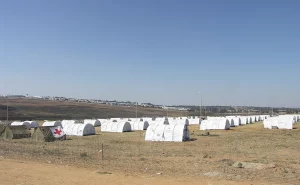
As in many countries, in South Africa migrants have become scapegoats for the rise in crime and unemployment. Political parties are capitalizing on this xenophobic sentiment to garner support in the upcoming election. MK’s former leader A militia group called Operation Dudula which is aggressively anti-immigrant in sentiment (hate speech) and action (violence) has now registered as a political party. Another party called ActionSA argues that migrants add strain to social services and do not offset these costs by paying taxes, despite saying on their website that they “will respect and celebrate our diversity.”
The ANC’s 2024 party manifesto states a plan to “give preference to South African job-seekers and act against employment and exploitation of undocumented persons.” The EFF appears focused on eliminating undocumented migrants and registering all migrants with national authorities. IFP is strong in their anti-migrant rhetoric, stating in their 2024 manifesto that “illegal migrants are lawbreakers who pose a threat to the safety and security of the State, while placing a heavy strain on South Africa’s resources.” The DA do not mention migrants at all in their manifesto.
Israel-Hamas war
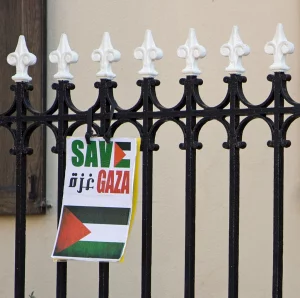
While typically South African elections are decided on domestic issues, there is a chance that foreign policy could play a role in the 2024 election. Under the ANC’s leadership, South Africa was the first country to call the war a genocide. Support of Palestine brings Black and Muslim voters together in an anti-apartheid spirit. However, it is likely that many of them were already planning on voting for the ANC. The DA has been supportive of Israel. Co-founder of Afrobarometer Robert Matte said for Muslim voters “who are highly motivated by a party’s approach to Palestine, those who vote for the DA will be irritated and revolted, but not enough for them to move to the ANC. If they move away from the DA, it will be to smaller parties.”
What this means for pluralism
The Global Pluralism Monitor: South Africa report reinforces that the issues listed above are key factors in South Africa’s pluralism journey. Issues of race continue to divide the country and inequality persists among ethnic groups. Women experience gender-based violence and face overall inequality, including around participation in the economy. Foreign nationals like migrants are often seen as a threat to the country and migrants experience challenges in accessing opportunities in South Africa. The competitive political parties in the upcoming election risk further entrenching divisions that threaten pluralism. The parties themselves are largely divided on these key issues and appear to have moved away from messages of unity that were present in the 2019 election.
South Africans have an important decision to make at the polls in May 2024. They are losing trust that an ANC government can fulfill the promises of the post-apartheid era. Coalitions of opposition parties are possible, though given the different views and approaches of the opposition parties there seems to be little enthusiasm for this approach. It is important to stay attuned to this election and see if a potential new government will help advance pluralism or fuel divisions in the country.
By Carolyn McKee